Tracing the Roots of a Literary Renaissance
Research & Inquiry
Smith College Professor Michael Thurston uncovers how one influential critic helped shape the early American literary landscape

Michael Thurston, Helen Means Professor of English Language and Literature
Published January 30, 2026
As difficult as it might be to believe today, there wasn’t much support in academic circles for the study of American literature during the early 20th century. A consistent set of writers worthy of in-depth scholarship was a rare find. “Literary study in English itself was fairly new to the academy,” says Smith College Professor of English Language and Literature Michael Thurston. “It was still being contested, and the idea that American literature was good enough was a wide-open question.”
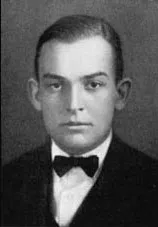
Then along came F.O. Matthiessen, a gay literary critic and Harvard professor who, with the 1941 publication of his influential tome, American Renaissance, helped define and refine the modern study of American literature, introducing generations of students, scholars, and critics to the now familiar canon of Walt Whitman, Nathaniel Hawthorne, Henry David Thoreau, Ralph Waldo Emerson, and Herman Melville.
Intrigued by what inspired Matthiessen to land on these “big five,” Thurston has made Matthiessen the focus of his latest research and the subject of a forthcoming book—a project made possible through a fellowship from the National Endowment for the Humanities. Thurston spent last year at the University of Oxford, where Matthiessen studied as a Rhodes Scholar in the early 1920s, combing through archives in the Bodleian Library and other repositories to identify the factors that influenced Matthiessen’s thinking. Much like a detective, Thurston painstakingly reconstructed lecture lists from Matthiessen’s time at Oxford. He read through exam questions to better understand the disciplinary priorities of the times, then matched Matthiessen’s academic experiences to his personal letters.
“I was trying to find out, What was the study of English at Oxford? Who were the key players? What were their writings, what lectures were they giving, and who was Matthiessen studying with?” Thurston recalls.
It was at Oxford, Thurston discovered, where Matthiessen began solidifying his sense of vocation as a literary scholar and professor. “I got a real sense of how he was coming to think about what literary study was and should be and how he should be going about it,” Thurston says. “Before Matthiessen got to Oxford, he kind of thinks that’s what he wants to do. But when he’s there, he completely commits to that idea. In fact, the Rhodes Scholarship gave him three years, but he ended it a year early so he could start his Ph.D. work and move faster toward becoming a professor.”
Thurston’s research approaches Matthiessen, who went on to have a long career at Harvard, not simply as a canonical critic but as a politically engaged intellectual whose ideas were formed during a highly charged moment in the 20th century marked by the aftermath of World War I, the cultural upheaval of the 1920s, the rise of fascism in Europe, and his own experience as a gay man forced to hide his sexuality. Ultimately, Matthiessen’s mission to define what constituted great American literature was both scholarly and strategic. He sought to elevate writers who would not only stand the test of time but who also shared his own worldview.
What unifies the writers Matthiessen centered as the leaders of the American literary tradition is both the high quality of their writing and their shared concern for democratic life. Throughout his adult life, Matthiessen identified as a socialist, aligning with the political left. According to Thurston, Matthiessen believed that literature could model a form of democratic citizenship rooted in relationships. “For him, democracy depended on the capacity to sustain difference,” Thurston explains, “and that meant valuing friendship, intimacy, and connection.”
The writers Matthiessen turned to were exploring these themes in their work and dramatizing democracy as an unfinished moral project, while also confronting capitalism, slavery, social conformity, and individual rights. This was, in his estimation, a view of America worth inheriting and sharing. “He comes to see American literature and American culture as something that has value both for left-leaning citizens transforming countries around the world as well as for the ways that Americans could talk to each other and work together,” Thurston says.
Matthiessen’s most notable book, American Renaissance: Art and Expression in the Age of Emerson and Whitman, collected these ideas and boldly asserted that American literature was just as serious, impactful, and complex as European literature. For decades, it was considered the foundation of most American literature departments at colleges and universities around the country. “It was crucial in the establishment of that early canon,” Thurston says.
“Matthiessen was a real force in exporting the idea that the study of American culture can do some good in the world.”
Beginning in the 1960s, as literary programs evolved, other critics began contesting Matthiessen’s work, introducing new writers and expanding the oeuvre of American literature to include women and people of color like Frederick Douglass, Emily Dickinson, Maya Angelou, and Toni Morrison.
Thurston, who joined the faculty at Smith in 2000 and served as provost from 2019 to 2024, says he first encountered Matthieson as an undergraduate at the University of North Texas. “One of the faded Xerox handouts we were given as part of an American lit class was a chapter of Matthiessen’s American Renaissance,” he recalls. In graduate school at the University of Illinois, Thurston became interested in American political writers of the 1930s and ended up devoting his dissertation and first book to the topic. “I was writing about writers who had run afoul of the American government because of their left-leaning political commitments,” he says. “Matthiessen shows up there. Year after year, course after course, topic after topic, he just kept showing up in my studies.”
When Thurston began casting about for his next project a few years ago, he remembered this mysterious scholar who seemed to be shadowing him, perennially in the background of his academic life. “I always thought that I wanted to read a biography of Matthiessen because I found him to be an incredibly interesting and compelling and complex character, but there wasn’t one, so I’ve set out to write one,” he says.
Though Matthiessen’s literary legacy may have fallen out of favor in recent years, his impact lives on. For example, Harvard has created a scholarship in his honor for the study of sex and sexuality, and a Matthiessen Room in Eliot House commemorates the scholar. But perhaps more importantly, Matthiessen’s belief in literature as a powerful influence on the advancement of democratic ideals feels particularly timely. “Matthiessen was a real force in exporting the idea that the study of American culture can do some good in the world,” Thurston says. “He intersected with a lot of different communities and ideas, and I’m interested in exploring all these big cultural questions that his life seemed to engage with.”